Dreaming about waking up to water views in St. Johns County? It is easy to picture the lifestyle first, but buying waterfront property here takes more than falling in love with a view. If you are considering oceanfront, Intracoastal, riverfront, or even a pond-view home, you need a clear plan for pricing, insurance, maintenance, and local rules. Let’s dive in.
Understand What “Waterfront” Means
In St. Johns County, “waterfront” covers a wide range of properties. A county-wide waterfront search currently shows 702 homes with a median listing price of about $539,000, but that number blends together very different property types.
That broad search can include pond-view homes in the roughly $475,000 to $500,000 range and higher-end Ponte Vedra waterfront homes above $2 million. In other words, the general waterfront category is useful for browsing, but it is not enough to build a realistic budget.
If you are buying here, the first step is defining the kind of waterfront lifestyle you actually want. The costs, ownership details, and day-to-day upkeep can change a lot depending on whether you want beach access, true oceanfront, Intracoastal frontage, or river access.
Compare the Main Waterfront Options
Broad Waterfront Homes
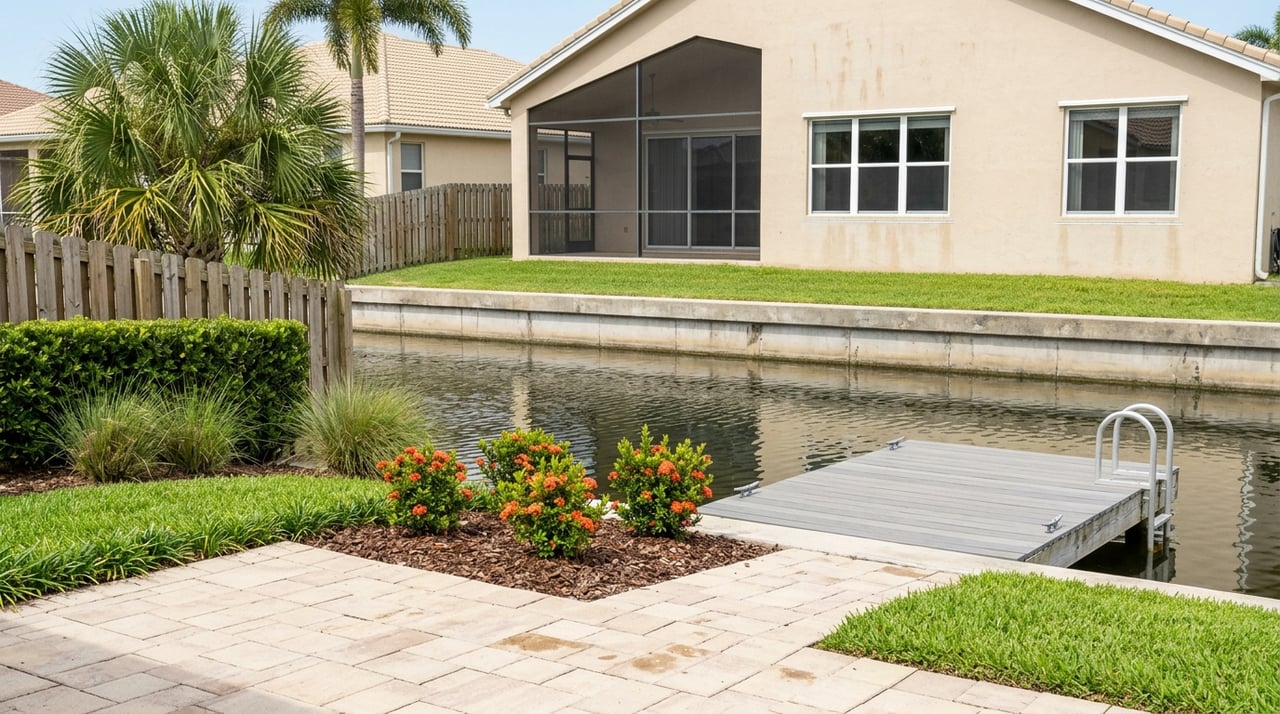
Broad waterfront searches often include homes with pond views, canal views, or smaller water features. These homes can offer a water-facing setting at a lower price point than true oceanfront or deep-water property.
For many buyers, this is the most approachable way to get some of the waterfront feel without taking on the highest purchase price or the same level of coastal exposure. It can also be a useful option if you want scenery more than boating access.
Ocean-Adjacent and Beach-Close Homes
If your goal is to live near the ocean, there is often a meaningful price difference between being close to the beach and being directly on it. Public St. Augustine oceanfront search data shows a median listing price of about $559,000, but that search includes condos and smaller units.
That matters because true oceanfront single-family homes usually sit in a very different range. Recent public examples include an oceanfront house on S Ponte Vedra Boulevard listed at $1.999 million and a 2025 oceanfront sale on the same corridor that closed at $3.0635 million.
This is why you want to compare property type, not just search labels. A condo near the ocean and a detached oceanfront house may both appear in broad “oceanfront” results, but they serve very different budgets and lifestyles.
Intracoastal Waterfront Homes
Intracoastal properties often attract buyers who care about boating, dock rights, and frontage. In this segment, value is often shaped by whether you have direct water access, a dock, a lift, or room for marine improvements.
Recent public examples show just how wide the range can be. A South Ponte Vedra Intracoastal-view home is listed at $1.705 million, while an Intracoastal waterfront home sold for $1.8 million and another sold for $1.265 million.
If you want true frontage with docking potential, expect pricing to rise quickly. The more direct and usable the access, the more important due diligence becomes.
Riverfront Homes
Riverfront living in St. Johns County can offer a broader entry range. A RiverTown river-view townhome with a private boat slip is listed at $659,000, while a riverfront property on State Road 13 sold for $1.65 million.
That spread shows the difference between a view-oriented property and a single-family home with direct frontage. If your priorities include boating convenience, private slip access, or larger frontage, you will want to compare beyond the list price and look closely at what is actually included.
Build a Smarter Waterfront Budget
A waterfront budget should include more than the purchase price. In St. Johns County, ownership costs can change based on flood exposure, wind-mitigation features, construction type, and marine improvements like docks or lifts.
County home prices were about $485,000 in March 2026, while St. Augustine Beach’s all-home median sale price was about $646,000 in April 2026. Those broader market numbers are helpful for context, but waterfront homes often carry extra ongoing costs that you need to plan for early.
Here are a few budget categories to review before you make an offer:
- Purchase price by property type
- Flood insurance needs
- Homeowners insurance and wind-related costs
- Roof, windows, and exterior replacement cycles
- Dock, lift, seawall, or frontage maintenance
- Permitting issues tied to coastal or water-access improvements
A home that feels like a stretch at closing can feel even tighter once insurance and upkeep are added in. That is why comparing total ownership cost is so important.
Review Flood Risk Early
Flood risk is a major part of buying waterfront property in St. Johns County, and it is not limited to oceanfront homes. The county notes that flooding can come from thunderstorms, seasonal high tides, and tidal surges tied to coastal storms, tropical storms, and hurricanes.
The county’s evacuation map separates coastal and river areas into different zones. Zone A includes the most low-lying coastal and river areas, while Zone F includes an area along the St. Johns River that is vulnerable to flooding.
St. Johns County floodplain staff regulate development in Special Flood Hazard Areas, including Zones A, AE, AH, AO, and VE. The county can issue current and historical FIRM determination letters at no fee, usually within three business days.
That makes flood-zone research one of the first steps you should take, not a box to check near closing. It can affect insurability, lender requirements, and your comfort with the property over time.
Know How Flood Insurance Works
Flood insurance is separate from a standard homeowners policy. Florida says it may be required by a mortgage lender depending on the property’s location.
Timing matters here. St. Johns County notes that flood policies commonly have a 30-day waiting period, so you do not want to wait until the week before closing or when a storm is in the forecast to start asking for quotes.
There is one cost advantage buyers should know about. Because St. Johns County has a CRS Class 5 rating, NFIP policyholders can receive a 25 percent discount when the policy is in force in the county.
When you are comparing homes, ask for flood information early so you can estimate the real monthly cost of ownership. This is especially important if you are relocating and trying to keep your budget predictable.
Check Wind-Mitigation Features
In coastal Florida, wind resistance can be a major insurance factor. Florida insurance regulators require wind-mitigation discounts for qualifying features, and the current state wind-mitigation inspection form was updated effective April 1, 2026.
That means features like impact-rated windows and doors, certain roof designs, and stronger construction details may affect your insurance costs. Current Ponte Vedra oceanfront examples show features such as pilings or concrete block construction, impact-rated openings, and metal roofs.
If you are comparing two similar homes, documented mitigation features may make one more attractive from a long-term cost standpoint. Ask whether the seller has current documentation that matches the updated inspection requirements.
For eligible owner-occupied homes insured at $700,000 or less, Florida’s My Safe Florida Home program currently offers free hurricane mitigation inspections and matching grants of up to $10,000. If the home qualifies, that may help with future hardening work.
Expect More Exterior Maintenance
Waterfront homes usually face harsher conditions than inland properties. Salt air, wind, moisture, and sun exposure can all shorten the life of exterior finishes and systems.
Oceanfront homes especially may be built with durability in mind, but that does not eliminate wear. It simply means you should expect a more durability-focused replacement cycle for items like roofing, windows, doors, storm protection, and exterior materials.
Intracoastal and riverfront homes may bring a different kind of maintenance. Recent listings in the area include private docks, boat and jet-ski lifts, whole-house generators, and large stretches of frontage, all of which can add convenience and ongoing upkeep.
If you are buying for the lifestyle, make sure your budget also matches the maintenance that comes with that lifestyle. The view is the fun part. The upkeep is the commitment.
Understand Permits and Coastal Rules
Waterfront ownership often comes with local and state oversight that matters long after closing. For coastal construction, the Florida DEP Coastal Construction Control Line program regulates structures and activities that may cause beach erosion, destabilize dunes, damage upland property, or interfere with public access.
Those permits also help protect sea turtles and dune plants. If a property has any beach armoring or storm-related shoreline work, it is important to confirm what has already been permitted and whether any follow-on approvals are needed.
On the river or Intracoastal side, St. Johns County code treats community marinas and neighborhood docks as regulated uses that can require review and permitting. If the property includes a dock, lift, seawall, or planned improvement area, you should verify the existing approvals and any limitations.
Think About Daily Lifestyle Tradeoffs
The right waterfront home is not just about price. It is also about how you want to live day to day.
St. Johns County’s beaches stretch 41.1 miles, and beach driving is allowed on 16.3 miles. During sea turtle nesting season, vehicular access gates close at 7:30 p.m., and open fires are prohibited while grills and fire pits are restricted on the beach during that period.
The county also maintains a light-management plan to protect nesting turtles. If you are buying beachfront property, you should expect turtle-friendly lighting rules and possible adjustments to exterior fixtures.
These rules are not deal breakers for most buyers, but they are part of the ownership experience. It helps to know them before you fall in love with a property that may require lighting changes or different expectations for beach use.
Ask These Questions Before You Buy
A strong waterfront purchase starts with smart questions. Before you move forward, make sure you understand both the property and the responsibilities that come with it.
Ask about:
- The current and historical flood zone
- Whether the seller can provide an elevation certificate or county FIRM letter
- Whether a separate flood policy may be needed
- The flood insurance waiting period for the policy you are considering
- Whether wind-mitigation features are documented on the current inspection form
- Whether permits are in place for any dock, seawall, lift, or beach armoring
- Whether exterior lighting complies with turtle-protection rules where applicable
These questions can save you time, money, and stress. They can also help you compare two properties more clearly when both seem appealing at first glance.
Why Local Guidance Matters
Buying waterfront property in St. Johns County is rarely a simple search-and-offer process. You are often balancing lifestyle goals with insurance timing, permit review, construction details, and long-term carrying costs.
That is where local guidance can make a real difference. Whether you are relocating, buying your primary home, or looking for a second property with water access, having a team that can help you compare the practical side of each option can keep you from making an expensive guess.
If you are thinking about buying waterfront property in St. Johns County, connect with Taquilla Allen for clear, local guidance on pricing, property type, and the due diligence steps that matter most.
FAQs
What does waterfront property mean in St. Johns County?
- In St. Johns County, waterfront can include pond-view homes, ocean-adjacent condos, true oceanfront houses, Intracoastal homes, and riverfront properties, so you need to look closely at the actual water access and property type.
How much does waterfront property cost in St. Johns County?
- Public county-wide waterfront search results show 702 homes with a median listing price of about $539,000, but that broad number includes everything from pond-view homes under $500,000 to Ponte Vedra waterfront homes above $2 million.
Are oceanfront homes in St. Johns County more expensive than beach-close homes?
- Yes. Public St. Augustine oceanfront search data shows a median listing price around $559,000, but that includes condos and smaller units, while recent oceanfront single-family examples on S Ponte Vedra Boulevard have been listed or sold from about $1.999 million to $3.0635 million.
Do waterfront buyers in St. Johns County need flood insurance?
- Flood insurance is separate from standard homeowners insurance, and Florida says a mortgage lender may require it depending on the property’s location.
How early should buyers shop for flood insurance in St. Johns County?
- Early in the process, because St. Johns County notes that flood policies commonly have a 30-day waiting period.
What flood information should buyers request for a St. Johns County waterfront home?
- Buyers should ask for the current and historical flood zone, and whether the seller can provide an elevation certificate or a county FIRM determination letter.
Do wind-mitigation features matter for St. Johns County waterfront homes?
- Yes. Florida requires wind-mitigation discounts for qualifying features, so items like impact-rated windows and doors or certain roof and construction details may affect ownership costs.
What extra maintenance comes with waterfront homes in St. Johns County?
- Depending on the property, you may need to budget for faster exterior wear from coastal exposure or for maintenance tied to docks, lifts, generators, seawalls, and other marine-related features.
Are there special rules for beachfront homes in St. Johns County?
- Yes. Beachfront ownership may involve turtle-friendly lighting requirements, and coastal construction or shoreline work may be subject to state permitting rules.
What is the biggest mistake buyers make with St. Johns County waterfront property?
- One of the biggest mistakes is focusing only on the view or asking price without fully reviewing flood risk, insurance timing, maintenance needs, and permit history.