Trying to decide between Clay County and Duval County for your next home? You’re not alone. Both offer great options around Jacksonville, but each delivers a different mix of price, commute, schools, and lifestyle. In this guide, you’ll get clear, data-backed contrasts plus practical next steps so you can choose with confidence. Let’s dive in.
Quick fit check
Clay County may fit you if:
- You want suburban neighborhoods with higher owner occupancy and newer planned communities.
- You prefer larger lots and a quieter feel in places like Fleming Island, Orange Park, or Green Cove Springs.
- You are comfortable with a longer average commute compared with urban areas of Jacksonville. (U.S. Census QuickFacts lists Clay’s mean travel time around 31.3 minutes.)
Duval County may fit you if:
- You want a wide variety of neighborhoods, from historic districts to beach towns and suburban pockets.
- You value faster access to downtown employers, the urban core, or the beaches.
- You want more transit options and a shorter average commute compared with most Clay locations.
Data notes: Prices are from MLS-based county medians reported for February 2026. Commute times reflect U.S. Census ACS 2020–2024 mean travel times. Effective property tax rates are from 2023 county comparisons.
Home prices and value (Feb 2026)
Prices vary by neighborhood and property type, but the latest county medians offer a helpful starting point.
- Clay County median sale price: about $341,000 as of February 2026.
- Duval County median sale price: about $305,000 as of February 2026.
These are closed-sale medians that show what buyers actually paid in recent months. Differences often reflect listing mix. For example, beach condos or historic bungalows in Duval can skew differently than newer single-family subdivisions in Clay. Days on market and inventory also differ by micro-market, so it is smart to compare recent sales in your target neighborhoods when you get serious.
Property taxes and annual costs
When you compare counties, use an apples-to-apples measure: the effective property tax rate. The Tax Foundation’s 2023 county table shows:
- Clay County: about 0.739 percent effective rate.
- Duval County: about 0.779 percent effective rate.
That is a narrow gap. Your actual bill depends on parcel details, homestead status, city or special-district millages, and Save Our Homes caps. Use the county tools for precise estimates. Clay County publishes millage details you can use for parcel-level context. Duval County’s Property Appraiser also offers a tax estimator tool.
- See county comparisons from the Tax Foundation’s dataset for effective rates. Review the county comparison methodology.
- For Clay parcel context, check the Clay County Property Appraiser millage page. View Clay millage information.
Quick example (illustrative only)
Using February 2026 median sale prices and 2023 effective rates:
- Clay: $341,000 × 0.739 percent ≈ $2,520 per year
- Duval: $305,000 × 0.779 percent ≈ $2,380 per year
This is a rough comparison and does not include exemptions or special assessments. Always run the specific address through the county estimator before you budget.
Commute and transit
Commutes are a major factor for many buyers. U.S. Census QuickFacts shows a clear contrast in mean travel time to work:
- Clay County mean commute: about 31.3 minutes.
- Duval County mean commute: about 24.1 minutes.
If you work downtown or near the beaches, living in Duval often trims drive time. If you want a newer suburban home and do not mind extra minutes in the car, Clay can be a great match.
Transit can also help. The Jacksonville Transportation Authority runs the First Coast Flyer bus rapid transit network and regional services that connect key job centers. If you plan to use transit, review routes, park-and-ride options, and schedules for your likely commute. Explore First Coast Flyer routes and features.
- For source data on commute times, review U.S. Census QuickFacts for county travel-time estimates. See Clay County QuickFacts.
Schools and programs
Both counties appear among high-performing districts in the state’s recent cycle. District grades and school-level results are published by the Florida Department of Education each year. For the 2025 release, public reporting shows both Clay County and Duval County listed with strong district ratings.
When schools matter to your decision, look up the current year’s district and individual school grades, and verify zoning boundaries for the exact address you plan to buy. Start with the official state portal, then confirm details with each district’s boundary maps and school pages. Check the FLDOE School Grades portal.
- Note: School experiences vary by specific campus. Use the district tools to verify assignment for the property you are considering.
Lifestyle and neighborhood feel
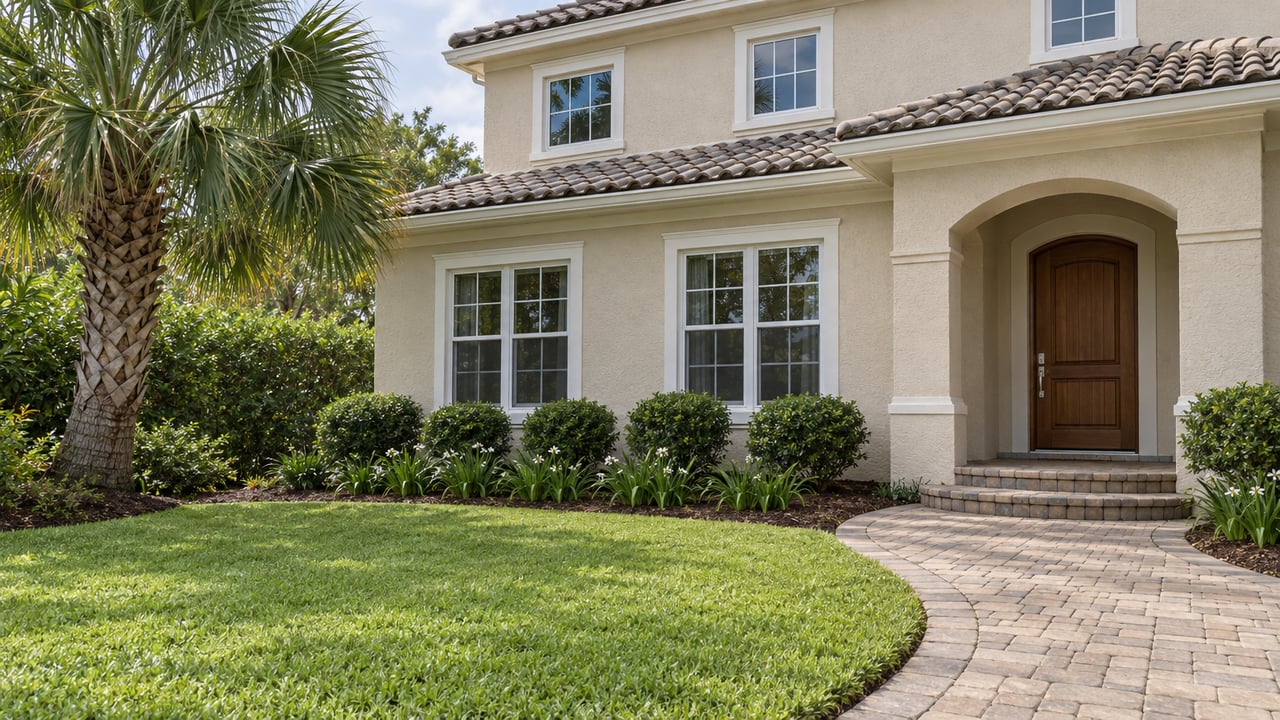
Clay County: Suburban communities like Fleming Island, Orange Park, and Green Cove Springs feature planned neighborhoods, community amenities, and a quieter pace. You will find a mix of newer homes, cul-de-sacs, and pocket parks. Many buyers choose Clay for space and neighborhood cohesion.
Duval County: You will find a wide range of choices, from historic Riverside and Avondale to Mandarin’s suburban homes and the Atlantic and Jacksonville Beach areas. Proximity to downtown, medical hubs, and coastlines can shape daily life and weekend plans.
Your best match comes down to your routine. If you love walking to coffee, a short drive to work, and beach days, your short list may lean Duval. If you want more house for the money and community amenities in a master-planned setting, Clay deserves a close look.
Insurance and HOA costs to plan for
Wind and flood insurance: Properties near the coast or in identified flood zones can carry higher premiums and specific coverage needs. Ask your insurance agent for quotes early in your search and review any elevation or flood-zone information.
HOA and CDD fees: Many newer subdivisions in both counties include HOA dues and sometimes Community Development District assessments. These can affect your monthly budget, so include them in your affordability check.
How to choose with confidence
- Clarify your must-haves. Rank commute time, neighborhood type, school needs, and budget.
- Compare total monthly cost. Include principal and interest, taxes, insurance, HOA, and estimated utilities.
- Test your commute. Drive your likely route during peak hours or review transit options if you plan to ride.
- Verify schools and zoning. Use the FLDOE portal and district tools for the most current assignments and grades. Open the FLDOE School Grades portal.
- Check parcel-level taxes. Use county estimators and millage info to validate your annual bill. View Clay millage information.
- Get coverage quotes. Ask for sample wind and flood insurance quotes on the addresses you like most.
Ready to narrow your list? A local, data-forward strategy session can save you time and money.
Talk with a local pro
If you want a side-by-side comparison of your top neighborhoods, recent sales that match your budget, and a clear plan for offers, we can help. Our team works across Clay and Duval and understands military moves, relocations, first-time buyer financing, and investor needs. Connect with Taquilla Allen to start a focused home search today.
FAQs
What are typical 2026 home prices in Clay vs Duval?
- As of February 2026, county medians show Clay around $341,000 and Duval around $305,000, with neighborhood and property type driving the biggest differences.
How do Clay and Duval property taxes compare?
- 2023 effective rates are close, with Clay near 0.739 percent and Duval near 0.779 percent; run a county tax estimator for the specific address to account for exemptions and local millage.
Which county usually has shorter commutes to downtown Jacksonville?
- Duval generally offers shorter drives on average, with a mean commute near 24 minutes compared with Clay’s mean around 31 minutes, though your exact time depends on neighborhood and route.
How are public schools rated in both counties?
- Recent state reports list both districts among high-performing systems; check the FLDOE portal for the current year’s district grade and verify school-level results for your chosen address.
What extra costs should I expect near the beaches or in HOAs?
- Plan for potentially higher wind or flood insurance near the coast and factor in HOA or CDD fees in many newer communities, which can affect your monthly budget.