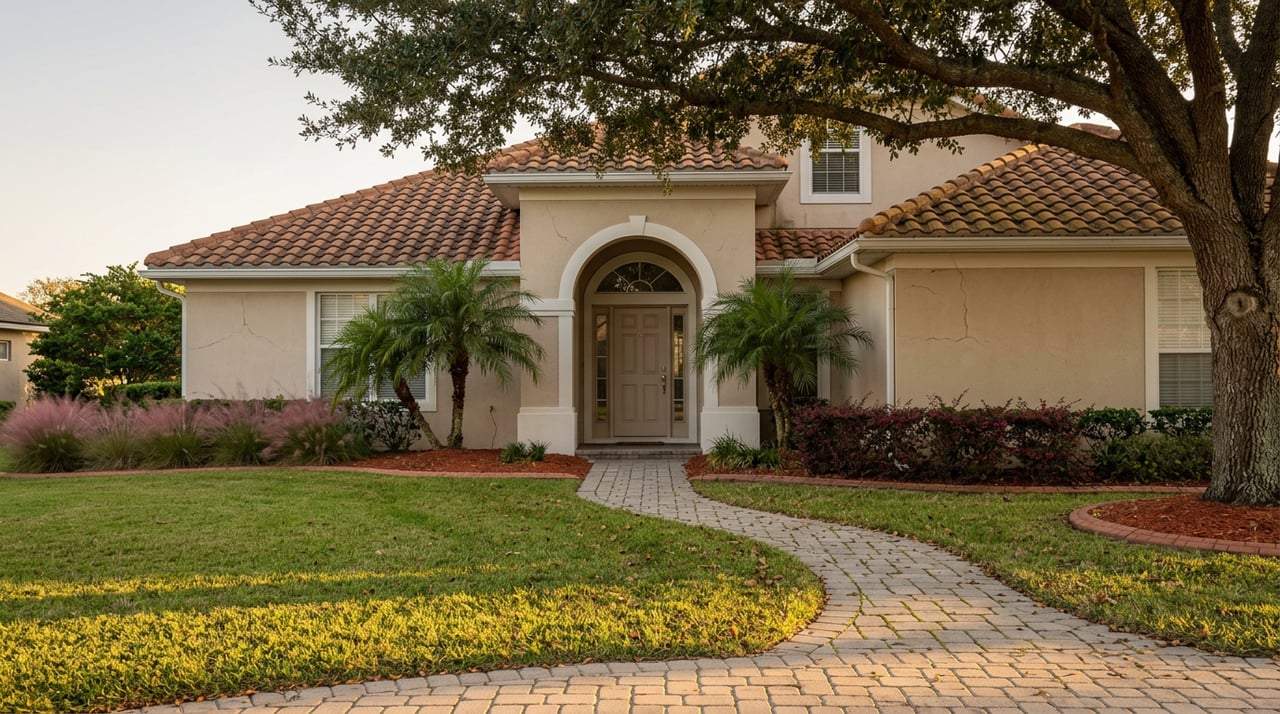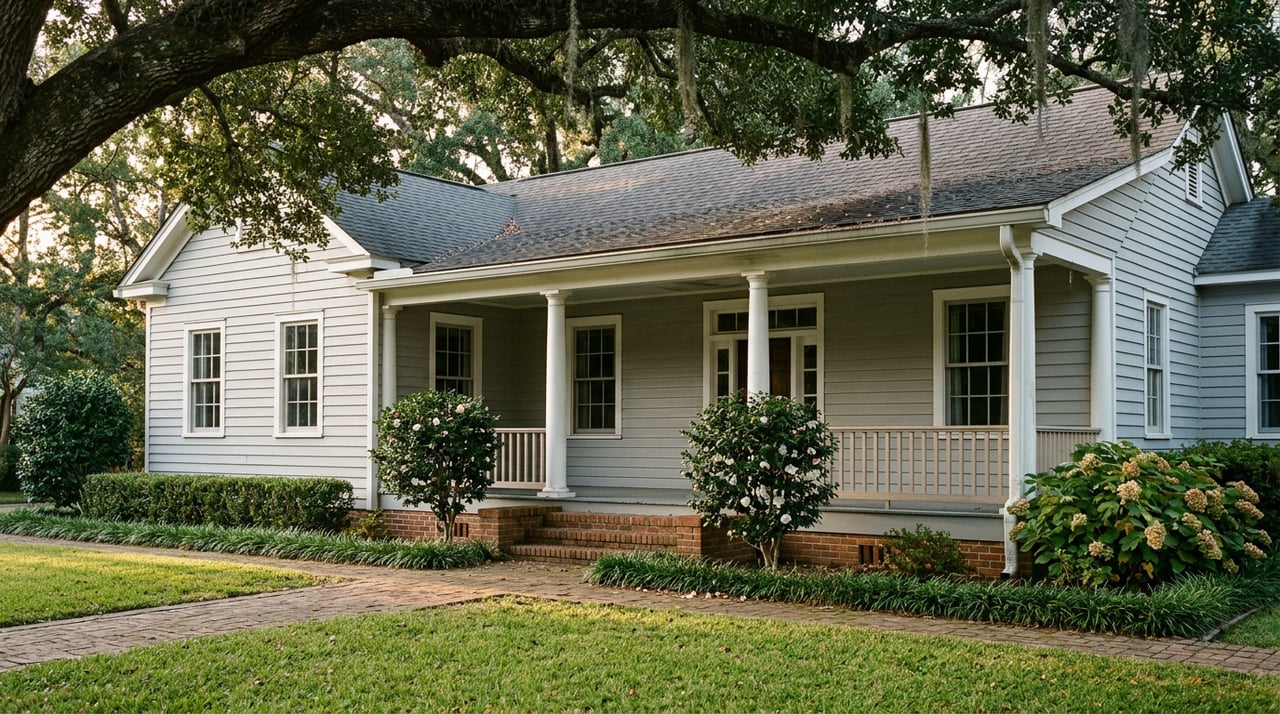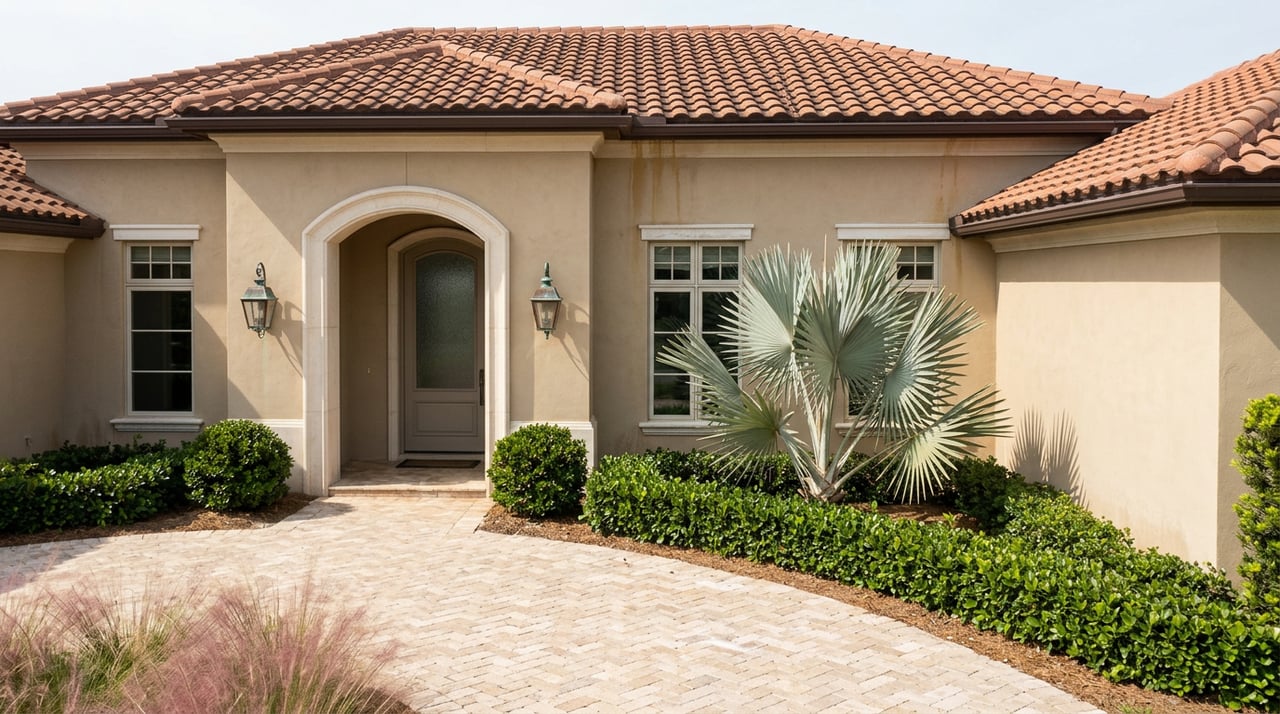
Two three-bedroom homes list at $575,000 in St. Johns County this month. Same square footage, same builder grade, same school zone. One sits in Nocatee. The other sits in Palencia. A buyer comparing them side by side on price alone would call it a coin flip.
It isn't. One of those homes carries an annual district assessment that could run a thousand dollars less than the other, and neither number shows up anywhere near the list price. It shows up on the county tax bill, months after the offer is signed, as a line most buyers have never heard of until they're staring at it.
St. Johns County's median sale price sat at $513,000 over the three months ending May 2026, up 2.7 percent year over year, with homes selling in a median of 64 days. That number is useful for sizing up the county as a whole. It is close to useless for comparing two specific master-planned communities, because the number that actually separates them lives one line below the sale price, in a charge called a Community Development District assessment.
What a CDD Actually Is, and Why It Exists
A Community Development District is a special-purpose local government, created under Chapter 190 of Florida law, with the authority to issue bonds and collect assessments to pay them back. Developers use CDDs to build a community's roads, stormwater systems, and amenities up front, financed through tax-exempt bonds, instead of paying for all of it in cash before the first house sells. Homeowners then repay those bonds over time, typically 20 to 30 years, through an assessment that shows up as a non-ad-valorem line on the annual property tax bill, separate from the mortgage, separate from the HOA, and separate from the millage rate.
Every CDD assessment breaks into two pieces. The debt-service portion pays down the bonds. The operations-and-maintenance portion, set annually by the district's own budget, keeps the pools running, the landscaping maintained, and the trails paved. The debt piece can be paid off early. The maintenance piece continues for as long as the amenities exist, which in most of these communities is indefinitely.
That structure is exactly why the same list price can hide two very different carrying costs. The bond schedule, not the square footage, decides how much of that assessment is still outstanding.
Six Communities, Six Different Bills
St. Johns County has roughly 20 CDD communities, and no two charge the same amount. Here is what the county's biggest master plans were actually billing homeowners as of the FY2025-26 assessment cycle:
| Community | District | Typical Annual CDD Assessment |
|---|---|---|
| Nocatee (St. Johns County side) | Tolomato CDD | $1,315 to $3,539 |
| Palencia | Marshall Creek / Sweetwater Creek CDD | $3,000 to $4,930 |
| RiverTown | Rivers Edge CDD III | $1,996 to $2,662 |
| Shearwater | Trout Creek CDD | $2,322 to $2,964 |
| Beachwalk | Beachwalk CDD (varies by section) | $1,200 to $5,000 |
| SilverLeaf | None | $0 |
Look at the spread inside Nocatee alone. A homeowner in one village pays $1,315 a year. A homeowner in another village, same community, same brand, pays $3,539. That range comes down to lot width, product type, and which bond series financed that particular phase of construction, not anything a buyer would notice from the curb.
Palencia runs higher across the board, and that tracks with what the assessment funds there: the Palencia Club's amenity network, the Swim and Fitness Center, the Tennis Center, and the trail system tied to two separate districts, Marshall Creek CDD and Sweetwater Creek CDD, that share infrastructure under an interlocal agreement. Residents use one amenity system regardless of which district technically bills them, but the district determines the assessment schedule on their specific tax bill.
Beachwalk's Extra Line
Beachwalk complicates the math further. Every homeowner there is required to join the Beachwalk Club, the private entity that operates the community's 14-acre Crystal Lagoon and 12,000-square-foot clubhouse, and that membership is not optional and not part of the CDD. As of 2026, a standard single-family homeowner pays a one-time $5,000 initiation fee plus $315 a month. Townhome owners in the Crystal section pay a reduced $3,750 initiation and $201.60 a month. Add the community's CDD, which itself ranges from $1,200 to $5,000 a year depending on the section, and Beachwalk stacks three separate recurring charges, HOA dues, CDD assessment, and mandatory club fee, on top of the mortgage.
Run the club fee alone over a 10-year hold: $5,000 up front plus $315 a month comes to roughly $42,800. That is before the CDD line and before the HOA. It buys a genuinely resort-caliber amenity package, and plenty of buyers decide it's worth it. But it is not a number a listing sheet volunteers, and it is not optional once you own there.
SilverLeaf Is the Exception, Not the Rule
SilverLeaf is the one major St. Johns County master plan built without a CDD at all. Instead of financing its roads, parks, and amenity centers through district bonds, SilverLeaf's developer funded them directly, and homeowners cover ongoing upkeep through HOA dues alone. That structural difference is confirmed across the community's own materials and independent buyer guides, and it is the single biggest financial distinction between SilverLeaf and comparably sized communities like Nocatee.
To be clear about what "no CDD" does and doesn't mean: it means no debt-service assessment and no separate district line on the tax bill. It does not mean free amenities. SilverLeaf's HOA structure still funds the pools, the 50-plus miles of sidewalks and cart paths, and the amenity centers, and dues vary by section, from roughly $1,200 a year on standard single-family lots to $2,000 in some gated enclaves and $364 to $400 a month in the community's 55-plus village. The right comparison was never CDD versus no CDD. It's total annual carry, HOA plus CDD plus any club fee, against the same total for a comparable home somewhere else in the county.
The Wrinkle Even a Careful Buyer Can Miss
Here's the part that catches people who did all their homework on the community and none on the specific parcel. Within the same Nocatee village, on the same floor plan, two homes can carry different CDD bills, because one owner prepaid the debt portion of the assessment and the other didn't. The listing usually won't say which is which. The only way to know is to pull the seller's most recent county tax bill and check the non-ad-valorem line, or request an estoppel letter from the district directly.
That single fact, more than the county-versus-county comparison, is why the median price is the wrong starting point. Two homes in the identical section of the identical community, priced within a few thousand dollars of each other, can carry meaningfully different total costs of ownership depending on a bond schedule that predates either owner.
What to Actually Ask Before You Write an Offer
Before comparing two St. Johns County communities on price alone, get these answers for the specific parcel, not the community brand:
- The exact CDD district name and number tied to the address, since large communities often split across more than one district
- The current annual assessment, broken into debt-service and O&M
- The bond maturity date, so you know how many years of debt-service payments remain
- Whether the debt portion has already been prepaid on that specific lot
- The HOA dues separately, since they are billed differently and fund different things
- Any mandatory club or amenity fees tied to the community, as in Beachwalk's case
The Tolomato Community Development District, which covers Nocatee, publishes a resident assessment lookup directly on its own site, and will issue an estoppel letter with the exact debt payoff figure for a $250 processing fee. Other districts charge their own fee for the same document, so confirm the amount before you request one.
A Few Straight Answers
Does the CDD assessment ever go away? The debt-service half ends when the bonds mature, generally 20 to 30 years from issuance, or sooner if the specific lot's bond is prepaid. The operations-and-maintenance half continues for as long as the amenities operate, which in practice is indefinitely.
Is a no-CDD community automatically cheaper to own? Not always. A no-CDD home still pays full HOA dues, and in communities like SilverLeaf's gated sections those dues can run several hundred dollars a month. Compare the full annual carry, not just the presence or absence of a CDD line.
Who actually controls a CDD? A board of supervisors, initially made up of the developer and its associates, transitions to resident control as the community builds out and more homeowners move in. Board meetings and budgets are public record.
The median price tells you what St. Johns County costs on average. It doesn't tell you what a specific home in a specific section of a specific community will actually cost you to hold for the next ten years. That number lives in the CDD assessment, the bond schedule behind it, and the HOA and club dues stacked on top. Pull those figures before you compare two listings on price alone.
If you're weighing Nocatee against Palencia, or trying to figure out what a specific Beachwalk or SilverLeaf address actually carries once every fee is on the table, RCRE Group can pull the district assessment, the HOA budget, and the bond payoff status for any parcel you're considering before you write an offer.